Strategic Intelligence Feed
Real-time analysis of the resources and power shifts redefining global sovereignty
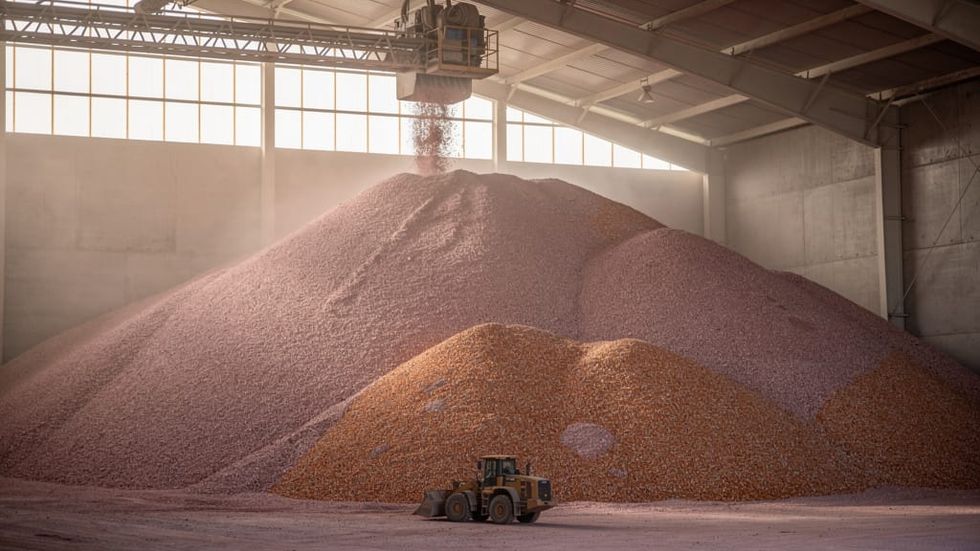
Two Nutrients and Only One of Them Is Scarce
Diammonium phosphate sold for 800 dollars a tonne in September, forty six percent above its 2024 average and the highest the World Bank series has recorded since 2022. Muriate of potash sold for 367 dollars, down from 405 in May and thirty five percent below where
Diammonium phosphate sold for 800 dollars a tonne in September, forty six percent above its 2024 average and the highest the World Bank series has recorded since 2022. Muriate of potash sold for 367 dollars, down from 405 in May and thirty five percent below where it stood in August 2022.
These two products are sold by the same companies to the same farmer in the same season, and they have come apart almost completely. What is usually discussed as one market, fertiliser, is now two unrelated markets with opposite problems.
Phosphate is tight for reasons that have nothing to do with rock. China, which mines about forty four percent of the world's phosphate rock, restricted exports of finished phosphate fertilisers in March after disruption in the Strait of Hormuz, and extended it through the summer. By one analysis of customs data, between half and four fifths of Chinese fertiliser export volume fell under some form of control. India, the buyer with the least room to refuse, booked about 1.35 million tonnes in May at 930 to 935 dollars delivered, having paid 865 a month earlier.
Potash is loose for an equally political reason. Belarusian supply is coming back.
The Historical Echo
Potash is the clearest case in modern commodity history of a price held up by an arrangement rather than by geology, and of what happens the morning the arrangement ends.
Potash averaged around 145 dollars a tonne through the early 2000s and approached a thousand at the 2008 peak. The collapse was brutal: the Chinese contract settled at 350 dollars the following year, about half the previous one.
The structural break came later. On the thirtieth of July 2013 the Russian producer Uralkali announced it was leaving the Belarusian Potash Company, the export joint venture that had marketed Russian and Belarusian potash together since 2005, and would sell its own volumes instead. That venture had handled something like forty three percent of the world market, and together with the North American marketing arm controlled two thirds of a business worth roughly twenty two billion dollars a year.
The reaction was immediate. Uralkali fell 14.6 percent in Moscow, Potash Corporation 16.5 percent in New York, Mosaic 17.3. The chief executive said publicly that prices could fall about a quarter, from around 400 dollars to below 300. He was then invited to Minsk for talks, detained there on the twenty sixth of August, and extradited to Russia in November.
The price did what he said. The World Bank annual average went from 459 dollars in 2012 to 379 in 2013 and 287 by the second quarter of 2014. The cartel was never put back together.
Where Patient Capital Is Positioning
The instructive part is what did not change. Canada supplies about thirty one percent of world potash, Russia twenty and Belarus twelve. That is sixty three percent in three jurisdictions, as concentrated as it ever was. Phosphate is tighter still: Morocco alone holds roughly sixty eight percent of global reserves. Concentration was never the thing that set the price. Discipline was, and discipline is a choice that can be withdrawn in a single press release.
Today the same distinction is visible in the politics. The United States delisted the Belarusian producers in March after a prisoner release, while the European Union, which is Belarus's natural market, has not. The practical effect is modest: some 11.6 million tonnes of Belarusian product already moved through Russian ports last year. The sanctions were largely re routed rather than binding. Meanwhile the Belarusian marketing arm, the surviving half of the cartel that broke in 2013, still sets the Indian benchmark, settling this year's contract at 383 dollars.
On phosphate the American position is at war with itself. The administration declared a fertiliser supply emergency at the end of June and suspended its own countervailing duties on Moroccan phosphate for eight months, while the Commerce Department was recommending those duties be renewed.
For capital that owns productive land rather than trading screens, this is the input cost that decides whether an acre earns anything. Nitrogen affordability measured against the corn price is back at levels last seen at the 2022 peak. A farm balance sheet can survive a bad price year or a bad cost year. What it cannot easily survive is both, and the phosphate half of the bill is currently being set by a Chinese export desk and an American trade lawyer rather than by anything in the ground.
The Capital Memo