Strategic Intelligence Feed
Real-time analysis of the resources and power shifts redefining global sovereignty
The Stockpile Sold the One Rare Earth It Had
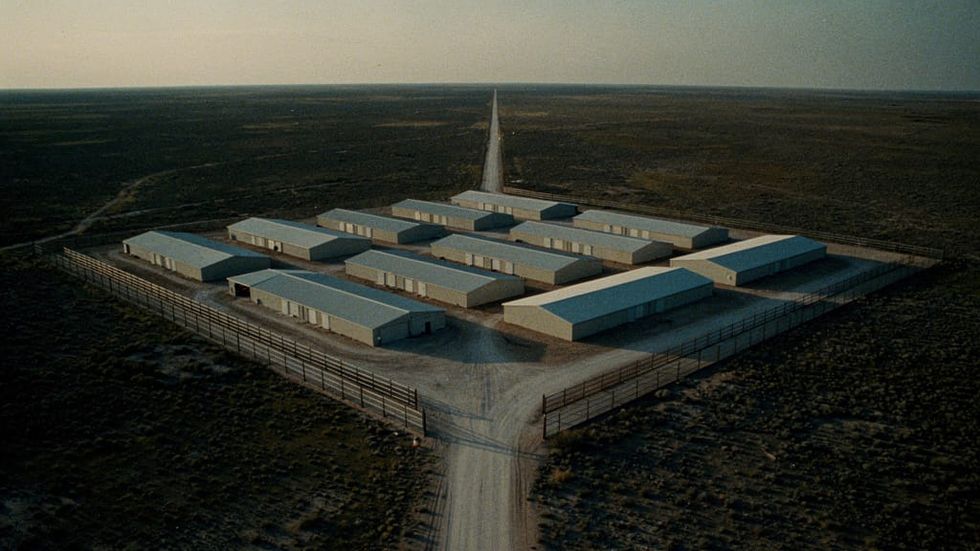
In 1998 the United States sold its entire holding of yttrium. It was the only rare earth element the national stockpile contained. Twenty seven years later yttrium is on China's export control list, and American imports fell roughly ninety five percent in the eight
In 1998 the United States sold its entire holding of yttrium. It was the only rare earth element the national stockpile contained. Twenty seven years later yttrium is on China's export control list, and American imports fell roughly ninety five percent in the eight months after those controls took effect.
That transaction is a fair summary of what happened to the National Defense Stockpile. At its peak at the end of the 1980s it held more than ninety materials worth about 9.6 billion dollars, something like twenty two billion in today's money. The most recent official valuation puts the stockpiled material at 912.3 million dollars across roughly fifty material types. In real terms the reserve is about four percent of what it was.
The Defense Department's own accounting of the gap has moved the other way. Materials in shortfall went from thirty seven in the 2019 fiscal year, worth 4.3 billion dollars, to ninety nine in 2023, at 18.7 billion, and more than ninety percent of those had one domestic supplier or none. Against that, Congress appropriated 218.5 million dollars across those five years.
The Historical Echo
The stockpile was created in the last year of peace and built in two wars.
The Strategic and Critical Materials Stock Piling Act was signed on the seventh of June 1939, authorising a hundred million dollars against a list of forty two materials. The first procurements, in May 1940, were chromite, manganese, rubber and tin. When Pearl Harbor was attacked the stockpile was worth fifty four million dollars, which is to say almost nothing. The real wartime buying was done by a separate entity, the Metals Reserve Company, which spent 2.75 billion dollars.
Korea produced the serious build. Congress appropriated 2.9 billion dollars in six months, and inventory rose from 1.15 billion at the end of 1949 to 4.02 billion by 1952. Actual releases during the Korean War came to about sixty million dollars. The stockpile was built for a war it was barely used in.
Then the requirement was redefined and the selling began. By 1958 planning assumed a three year conflict and all but twelve of seventy five materials were declared excess. The Nixon administration then accelerated disposals hard, and by the end of the 1974 fiscal year cumulative disposals had reached 2.05 billion dollars. The same 1973 policy cut the cobalt goal by seventy percent, which is one reason the market was so exposed when Zaire was invaded five years later.
The sales moved markets, and the clearest case is tin. The government sold about 93,000 long tons between 1962 and 1968 while the international tin buffer stock was a net buyer of 11,471 tonnes. The Bureau of Mines concluded that American sales brought prices down from their 1964 and 1965 peaks, and in 1966 the United States agreed to moderate them.
Where Patient Capital Is Positioning
The rebuild is real and it is smaller than the headlines.
The legislation signed on the fourth of July last year put two billion dollars into the stockpile's transaction fund, and the latest budget request asks for eighteen billion, roughly the figure the Government Accountability Office put on eliminating the shortfall. Congress, it is worth noting, transferred more than six billion dollars out of that same fund between 2002 and 2022.
What has actually been bought is modest. An antimony contract awarded last September is worth up to 245 million dollars over five years for about three thousand tonnes. A tungsten agreement signed this September carries a two billion dollar ceiling with a hundred and fifty million funded, and the supplier has said openly that it does not intend to deliver until enough new supply exists. A five hundred million dollar cobalt solicitation with a guaranteed minimum of two million was cancelled over paperwork.
The constraint is not money. It is that the material does not exist in Western hands to buy. Meanwhile the current plan proposes buying 13,608 tonnes of titanium and simultaneously selling five thousand kilograms of germanium and 640 tonnes of tin, both of which China has restricted.
For capital that thinks in decades the pattern is worth carrying away. Governments are structurally poor holders of physical commodities, because the political incentive is to monetise an inventory against a fiscal number rather than hold it against a physical risk, and the risk arrives on a schedule nobody controls. A private holder who buys a real asset and keeps it through a generation is doing the thing the state has repeatedly proved it cannot.
The Capital Memo