Strategic Intelligence Feed
Real-time analysis of the resources and power shifts redefining global sovereignty
The Quota Was Cut and the Price Went Down Anyway
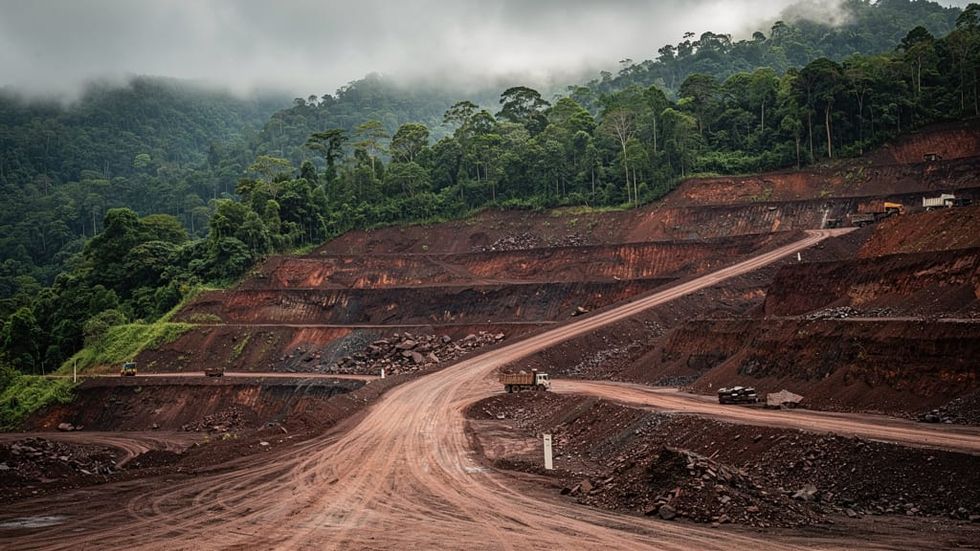
Indonesia produces about sixty percent of the world's nickel. This year it cut the ore tonnage its miners are permitted to dig from a ceiling of 379 million tonnes to somewhere between 250 and 260, a reduction of roughly a third. It moved royalties
Indonesia produces about sixty percent of the world's nickel. This year it cut the ore tonnage its miners are permitted to dig from a ceiling of 379 million tonnes to somewhere between 250 and 260, a reduction of roughly a third. It moved royalties on nickel ore from a flat ten percent to a progressive fourteen to nineteen, and in April rewrote the formula setting the domestic reference price for ore, adding by one estimate about 2,652 dollars per tonne of contained nickel to the cost of the wet process route.
Nickel traded at 15,445 dollars a tonne on the London Metal Exchange this week. The 2025 average was 15,162. The producer that controls the majority of world supply spent a year restricting volume and raising costs, and the price is back where it started.
The reason is sitting in the warehouses. London Metal Exchange stocks stand at 282,525 tonnes, up some 32,000 tonnes over twelve months. The International Nickel Study Group met this week and forecast a surplus of nineteen thousand tonnes for this year and seventy thousand for next. In April the same body had forecast a deficit.
The Historical Echo
Four years ago this market had the opposite problem, and it broke the exchange.
On the seventh of March 2022 nickel on the London Metal Exchange opened near 29,770 dollars a tonne and closed officially at 48,075, up sixty six percent in a day. It reopened at one in the morning on the eighth, cleared sixty thousand before five, and printed 101,365 dollars at eight minutes past six. The exchange suspended trading at a quarter past eight and at noon voided every nickel trade executed that day, a notional 13.373 billion dollars of business. Trading resumed on the sixteenth with a fifteen percent daily price limit.
Underneath it was a short position of between one hundred thousand and three hundred thousand tonnes, built from December 2021 at eighteen to nineteen thousand dollars by a Chinese stainless steel producer, at times several times larger than all the deliverable nickel in the exchange's warehouses. The margin call on the seventh of March was 12.5 billion dollars. A call of 19.75 billion due the next morning was never made.
The courts upheld the cancellation, the Court of Appeal finding the exchange had effectively no choice. The British regulator took a different view of the controls that let it happen and fined the exchange 9,245,900 pounds last March, its first ever penalty against a recognised investment exchange.
The structural cause was that too little of the world's nickel was in a form the exchange would accept. Class one metal, the only kind deliverable against the contract, is about a quarter of global supply. The exchange's answer was to go and get some: it fast tracked brand listings, waived fees, and accepted the first Indonesian brand in 2024.
Where Patient Capital Is Positioning
It worked. Chinese brands went from about half of available London tonnage at the start of 2025 to around seventy percent by that October, and including metal of Indonesian origin the figure is closer to seventy five percent. The warehouses are now full of exactly the metal the exchange spent two years courting, and the result is a market that cannot be squeezed and cannot rally.
Meanwhile the producers outside that system are closing. Australia's largest nickel operation went into care and maintenance at the end of 2024 after fifty one years. A major laterite operation was written down by 457 million dollars to zero in August. A New Caledonian smelter was abandoned outright.
The demand side offers no rescue. Stainless steel is more than sixty percent of nickel consumption and always was; the battery chemistry that was supposed to absorb the surplus has been losing share inside China to a chemistry that uses no nickel at all.
For capital thinking across decades the lesson here is about the difference between controlling a resource and controlling its price. Indonesia has the former absolutely and has just demonstrated it does not have the latter. Three quarters of its smelting capacity is foreign owned, the cost increases it imposed fall hardest on independent ore buyers rather than the integrated giants, and a study group revised the same year's balance from surplus to deficit and back in six months. When a market's balance is a policy variable rather than a geological one, the quoted price stops being information about scarcity. The ore in the ground is still the asset. The quota is paper, and so is the forecast.
The Capital Memo