Strategic Intelligence Feed
Real-time analysis of the resources and power shifts redefining global sovereignty
Sixty Five Thousand Tonnes Mined, Thirty One Thousand Allowed
The Democratic Republic of the Congo produces about seventy three percent of the world's cobalt. In February of last year it stopped exporting the metal altogether, and in October it replaced the ban with a quota: 96,600 tonnes for this year, of which
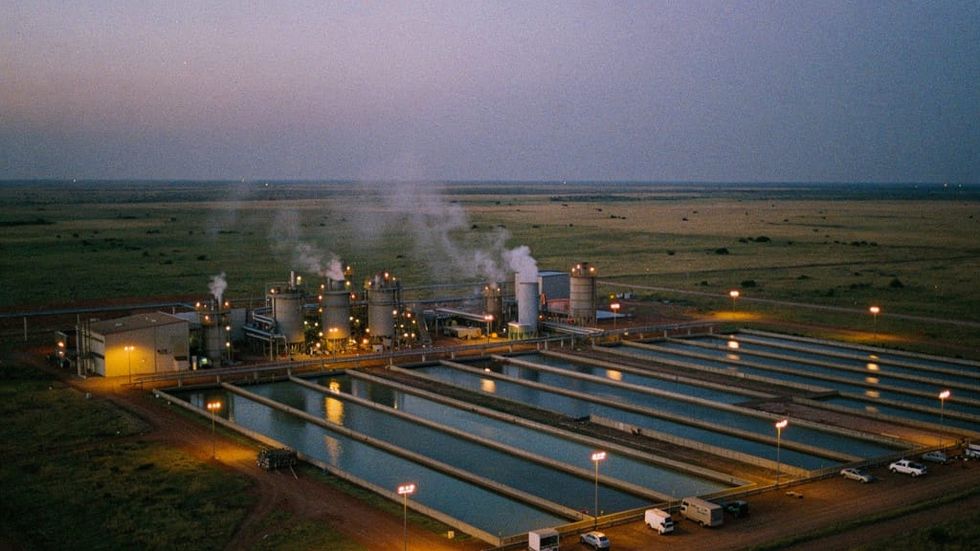
The Democratic Republic of the Congo produces about seventy three percent of the world's cobalt. In February of last year it stopped exporting the metal altogether, and in October it replaced the ban with a quota: 96,600 tonnes for this year, of which 87,000 is allocated to companies in proportion to what they used to ship and 9,600 is held back at the regulator's discretion.
The largest single allocation, 31,200 tonnes, went to the Chinese producer CMOC. In the first half of this year that company mined 65,305 tonnes, an increase of almost seven percent on the same period last year. It is producing at more than four times its permitted annual export rate.
Glencore, allocated 22,800 tonnes, did the opposite. Its own sourced cobalt output fell forty six percent in the first half, its Mutanda operation produced no cobalt at all, and the company is leaving cobalt in solution rather than drying it into saleable hydroxide. Two companies under the same rule chose opposite strategies.
The price has settled the argument. Cobalt hydroxide delivered into Asia fell about thirty one percent in the third quarter, to roughly 17 dollars a pound. This is a market under a formal export cap that is falling anyway, because the binding constraint is not the law. It is the stockpile sitting behind it.
The Historical Echo
Cobalt has had exactly one genuine supply shock in the modern era, and the way it resolved is the most instructive thing in the metal's history.
Shortly after midnight on the eleventh of May 1978, rebels crossed into Zaire's Shaba province from Zambia. By first light on the thirteenth they held Kolwezi, the mining town whose operations accounted for roughly sixty five percent of world cobalt supply. About 450 European technicians fled, and just over two hundred had returned by the end of the following year. Zaire supplied seventy one percent of American cobalt imports.
The price went from 6.40 dollars a pound in January 1978 to a record 20 dollars at the end of that year, and there was a day in May when buyers bidding 30 dollars found that sellers simply would not deal. Spot eventually printed as high as 50. The American government, holding some 41 million pounds in its strategic stockpile, had stopped selling, which made the squeeze worse.
Then the interesting part. Production itself was barely interrupted; Gécamines got back near capacity using Zairian workers after the Europeans left. What did not recover was demand. Estimated consumption fell about nineteen percent over two years. Cobalt loading in cemented carbides dropped from around ten percent to seven. Ceramic magnets displaced the cobalt bearing alloys outright, cutting magnet demand by roughly a fifth. Recycling rose from 2.4 percent of consumption to 6.9. By May 1982 the producer price was 12.50 dollars, half the peak, and the substitution was still going.
Where Patient Capital Is Positioning
The shape of the current market is almost the inverse of 1978 and the mechanism is the same.
In 1978 a physical disruption lasting weeks produced a price spike lasting two years and a loss of demand lasting decades. Today there is no physical disruption at all. There is a legal restriction on exports from one country, and a quantity of metal piling up behind it that nobody has counted publicly. Chinese imports of Congolese intermediate material exceeded 14,000 tonnes of contained cobalt in September, up seventy eight percent in a month, most of it going into bonded storage rather than into use.
Meanwhile the demand side is doing in slow motion what it did violently in 1979. Batteries are about seventy seven percent of cobalt consumption, and the chemistry that uses cobalt lost eight percentage points of electric vehicle market share last year to lithium iron phosphate, which uses none.
For capital thinking in decades the useful distinction is between a constraint on the metal and a constraint on the paperwork. The Congo controls the ore absolutely, and it has just demonstrated that controlling the ore is not the same as controlling the price. Its single biggest tightening this year was not even a decision: fifteen to twenty thousand tonnes of annual allowance was cancelled because a customs platform failed and shipments missed a July deadline.
The deeper lesson from 1978 is that a producer who uses a position of genuine scarcity to extract a very high price is buying a short term gain against a permanent loss of share. The engineers always answer, and they do not switch back.
The Capital Memo