Strategic Intelligence Feed
Real-time analysis of the resources and power shifts redefining global sovereignty
The Price Broke on a Spreadsheet
On the eighth of September the price reporting agency that most of the lithium market uses changed how it samples Chinese inventory. Reported stocks of lithium carbonate went from 78,800 tonnes to 175,000 overnight. No metal moved. Futures on the Guangzhou exchange fell more
On the eighth of September the price reporting agency that most of the lithium market uses changed how it samples Chinese inventory. Reported stocks of lithium carbonate went from 78,800 tonnes to 175,000 overnight. No metal moved. Futures on the Guangzhou exchange fell more than fourteen percent in three sessions, and one of the largest Chinese producers publicly disputed the revision.
Lithium carbonate traded at about 122,800 yuan a tonne at the end of September, the lowest of the year, with the January futures contract near 119,100 this week. That is roughly seventy nine percent below the late 2022 peak above 575,000 yuan. It is also a long way from the low of around 60,900 yuan set in May last year, and a long way below the 181,500 yuan the spot market reached in January of this year.
The awkward detail is what the same agency's own balance says. It has China running monthly deficits through the rest of the year: 19,600 tonnes in September, 20,100 in October, 21,500 in November. The price is falling into a physical shortfall, and the thing that broke it was a change in how a number is collected.
The Historical Echo
This market has already run one full cycle from glut to shortage, and it took less than three years.
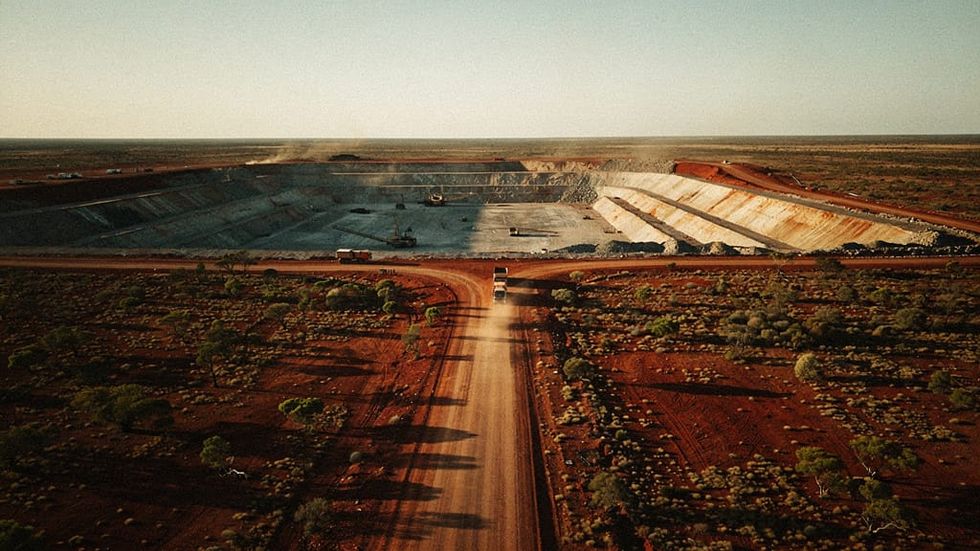
Spodumene concentrate, the hard rock feedstock, sold for 870 to 950 dollars a tonne in January 2018 and 370 to 400 by the end of September 2020. The supply response was not discipline. It was failure. Alita Resources, which operated the Bald Hill mine in Western Australia, went into administration in August 2019. Wodgina was placed on care and maintenance that same year and stayed shut until late 2021. Altura Mining, a producer of 220,000 tonnes a year of concentrate, went into receivership on the twenty sixth of October 2020 and was bought out of it by a competitor for 175 million dollars within weeks.
With that capacity gone, demand caught supply very quickly. Battery grade carbonate in China broke forty thousand dollars a tonne for the first time on the last day of 2021 and went above 575,000 yuan during 2022, with spodumene up more than a hundred percent between January and November of that year. Roughly two years of prices below cash cost were followed by a move of more than an order of magnitude.
The configuration today rhymes but is not identical, and the difference matters. Last cycle the idled capacity stayed idled for two years after the bottom. This time it is coming back while the price is still falling. Bald Hill, the mine whose owner went into administration in 2019, was restarted this year with a decision announced in May. Australian producers have been raising guidance rather than cutting it. Supply that took years to return in 2021 is returning in months.
Where Patient Capital Is Positioning
The demand side is the part that has genuinely changed, and most commentary is still looking at the wrong half of it.
Electric vehicles are no longer the marginal buyer. Grid scale storage is. Global additions ran at 273 gigawatt hours last year and are forecast at 359 this year, with storage demand up fifty five percent this year after seventy one percent last. More than eighty percent of Chinese carbonate demand now runs through lithium iron phosphate chemistry, which uses thirty to fifty percent more lithium per kilowatt hour than the nickel rich alternatives it displaced. The world is building a chemistry that needs more of the metal, not less, and bolting it to the electricity grid rather than to a car.
Supply has responded hard. World mine production rose about thirty one percent last year, to roughly 290,000 tonnes of contained lithium, against consumption of 263,000. Australia, China, Chile, Argentina and Zimbabwe all expanded.
For capital that thinks in decades rather than quarters, the useful observation is about the quality of the information rather than the direction of the price. This is a market whose benchmark is a survey, whose futures contract is four years old, and whose inventory figure can double on a methodology note. A price formed on data that thin will overshoot in both directions, and it has now done so twice in four years. The patient position is to take the physical balance seriously and the quoted price less so, which in practice means owning the ground and the processing capacity rather than trading the quote. Geology does not get revised.
The Capital Memo