Strategic Intelligence Feed
Real-time analysis of the resources and power shifts redefining global sovereignty
The Choke Point Under Every Harvest
The World Bank's fertilizer price index rose about twelve percent in the first quarter of this year and by April stood at its highest level since October 2022. The Bank expects a rise of more than thirty percent for the year as a whole,
The World Bank's fertilizer price index rose about twelve percent in the first quarter of this year and by April stood at its highest level since October 2022. The Bank expects a rise of more than thirty percent for the year as a whole, with urea up nearly sixty percent. United States Gulf urea passed $850 a ton in April, roughly eighty percent above where it sat in February.
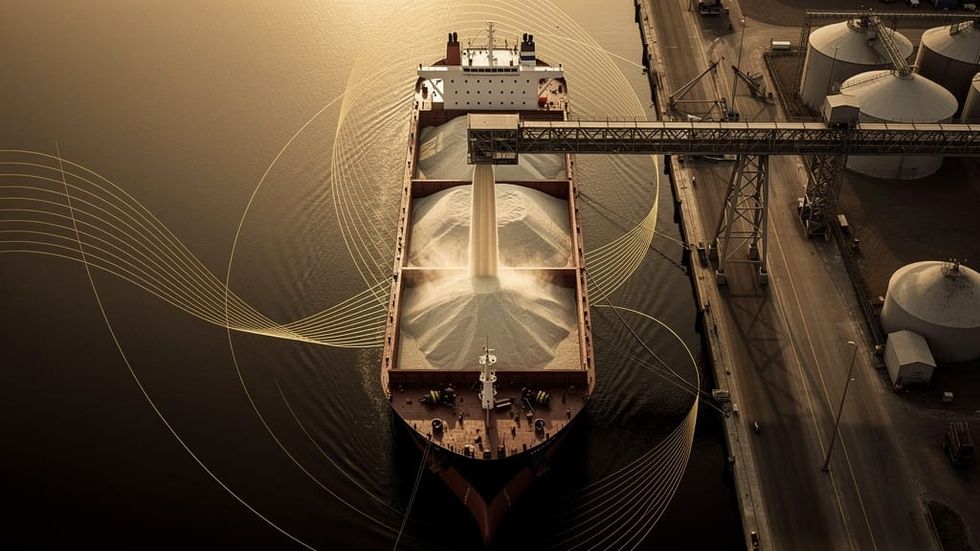
The immediate cause is the same disruption that reordered the oil market, reaching agriculture by a different route. Roughly a third of the world's seaborne fertilizer trade passes through the Strait of Hormuz, something on the order of sixteen million tons a year, and natural gas accounts for eighty to ninety percent of the cost of producing the ammonia from which urea is made. A waterway closure is therefore both a shipping problem and a feedstock problem at once. China then restricted exports of diammonium phosphate, monoammonium phosphate and certain blended products from March, extending the measures through August, explicitly in response to the same disruption.
The Historical Echo
Fertilizer has been a strategic choke point before, and the one previous occasion when the choke point was broken is instructive about how rarely that happens.
Before the First World War the world's nitrogen came from the Atacama desert. Chilean nitrate was mined, shipped and spread on fields across Europe and North America, and production roughly doubled from eleven to twenty five million tons between 1900 and 1920. Germany was the largest buyer, taking something like a third of Chilean output. When Britain blockaded that trade, Germany faced the loss of both its fertilizer and the feedstock for its munitions, and by 1918 the United States was absorbing roughly 95 percent of Chile's production.
The German response was Fritz Haber's ammonia synthesis, industrialised by Carl Bosch at BASF, which pulled nitrogen out of the air instead of out of the ground. By the early 1920s world synthetic nitrogen output had passed Chilean mine production. Nitrate prices fell by roughly two thirds between 1913 and 1937 and Chile's natural monopoly, which had seemed geological and permanent, was gone inside a decade.
That is the exception which proves the rule, and the rule is the part worth carrying forward. Nitrogen could be synthesised because it makes up most of the atmosphere. Phosphorus and potassium cannot. There is no chemical route to a phosphate atom. It has to be mined from rock that exists in a few places, and no laboratory will change that.
Where Patient Capital Is Positioning
The geography is stark. The United States Geological Survey puts Canada, Russia and Belarus together at roughly 65 percent of world potash production. China produces about 46 percent of the world's phosphate rock while holding only about five percent of reserves, and Morocco holds close to 68 percent of world phosphate reserves while producing about thirteen percent. American dependence follows from that. Of roughly 8.7 million tons of potash imported in the year to March, about 87 percent came from Canada, and more than half of imported nitrogen came from Russia and Canada combined.
The cost is landing on American farms now. Analysis from the University of Illinois estimates the disruption added about twenty seven dollars an acre to corn grown with anhydrous ammonia, and notes that many growers were shielded this season by inputs bought in advance, so the full effect will be felt in 2027. Retail anhydrous was running near $915 a ton in August, sixteen percent above a year earlier. The Farm Bureau expects record per acre production costs next year.
For anyone holding productive ground, the point is not to forecast the fertilizer price, which will fall again as these things do. It is that the ground's productivity depends on a mineral supply chain concentrated in four or five countries, none of which is guaranteed to remain a willing seller, and that this dependency is invisible in any land valuation. Acreage is valued on what it yields. What it yields depends on inputs that arrive by ship through straits that can close. That is not an argument against land. It is an argument for understanding that a tangible asset can still have an intangible dependency, and for knowing where yours runs.