Strategic Intelligence Feed
Real-time analysis of the resources and power shifts redefining global sovereignty
Rebuilding a Physical Capability the Country Once Had
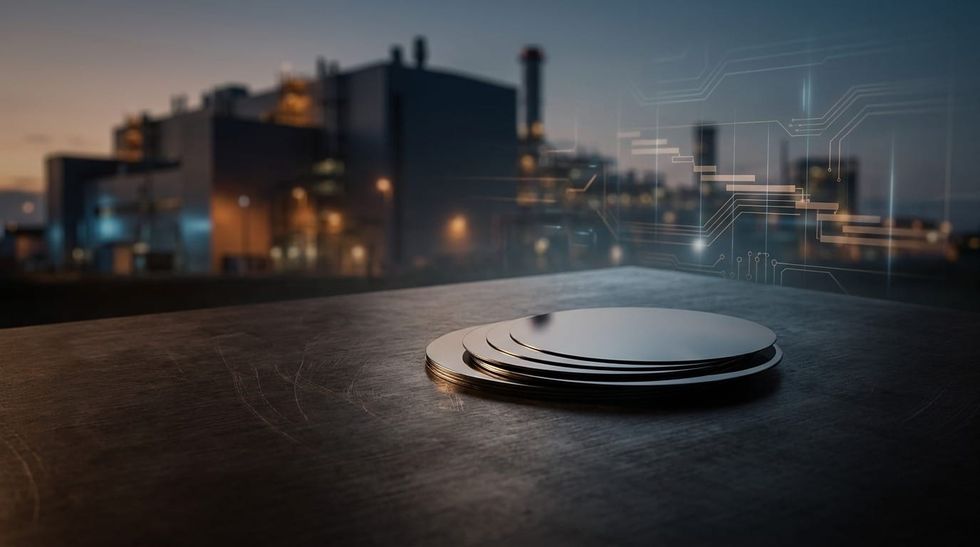
The first advanced chips built entirely on American soil in years are now coming off the line at a new fabrication plant in Arizona, a milestone years and tens of billions of dollars in the making, backed by federal funding aimed at reducing the country'
The first advanced chips built entirely on American soil in years are now coming off the line at a new fabrication plant in Arizona, a milestone years and tens of billions of dollars in the making, backed by federal funding aimed at reducing the country's dependence on chip manufacturing concentrated almost entirely in Taiwan. Equipment is being moved in for further expansion this year, with more advanced production targeted for 2027. The headline framing treats this as a technology story about chips and export controls. The more grounded framing recognizes that rebuilding a physical manufacturing capability a country once had, and let atrophy, takes years of sustained investment even when the political will and the money are both fully committed from the start.
The Historical Echo
The United States has rebuilt physical manufacturing capacity from nothing before, on a scale that dwarfs today's chip investment. When Franklin Roosevelt called on American industry to become the Arsenal of Democracy at the outset of the Second World War, Ford Motor Company took on one of the most audacious industrial conversions in the country's history, adapting its automobile assembly line techniques to build an entirely different and far more complex product, the four engine B-24 Liberator bomber. Ford broke ground on its Willow Run plant in 1940 and had the facility fully operational within two years, eventually employing roughly 42,000 workers, many of them women who had never worked in heavy manufacturing before, and reaching a peak production rate of one completed bomber every 63 minutes.
By the war's end, Willow Run had produced 8,685 B-24s, transforming a car company with no aviation experience into one of the most important aircraft manufacturers in the world in under three years. The conversion was not effortless. Aircraft were vastly more complex than automobiles, with constant design changes that were poorly suited to the standardized assembly line techniques Ford had perfected for cars, and early production badly lagged expectations before the plant found its rhythm. The lesson from Willow Run is not that physical manufacturing capacity can be conjured instantly. It is that a country with enough sustained investment, workforce mobilization, and institutional will can rebuild an entire physical production capability within a few years when the strategic stakes are considered serious enough to justify it.
Where Patient Capital Is Positioning
Today's semiconductor reshoring effort operates on a similarly compressed multi year timeline, with the first Arizona fab now producing chips for major customers after years of construction and investment, while more advanced facilities remain years from completion. That pace can feel frustratingly slow set against the speed of a stock market headline, but it tracks closely with how long it took Willow Run to go from groundbreaking to full production eight decades earlier. Physical manufacturing capability, whether building bombers or building chips, simply operates on a different clock than financial markets do.
For long-horizon capital, the pattern connects directly to what this publication has already observed in rare earth minerals, uranium enrichment, and domestic energy infrastructure this year. A nation can let a strategic manufacturing capability concentrate elsewhere for reasons that make sense during a period of calm, and then find itself needing years of sustained investment to rebuild it once circumstances change. That rebuilding is possible, as Willow Run proved decisively, but it is never instant, and the physical assets and infrastructure supporting that kind of reshoring, the fabs, the mines, the energy capacity behind them, represent a tangible claim on a process history shows takes real years to complete, not real quarters.
Willow Run's workers had no way of knowing in 1940 that their conversion effort would help decide the outcome of a world war within five years. The people building today's chip fabs, uranium enrichment facilities, and rare earth processing plants are working under a similarly uncertain timeline, without knowing precisely when or how the strategic case for that capacity will be tested. What history suggests is that the investment tends to look obviously worthwhile only in hindsight, and that patient capital willing to fund the buildout before the need becomes undeniable has historically been rewarded for that patience.
The Capital Memo