Strategic Intelligence Feed
Real-time analysis of the resources and power shifts redefining global sovereignty
Nobody Stopped Mining and the Price Fell by Half
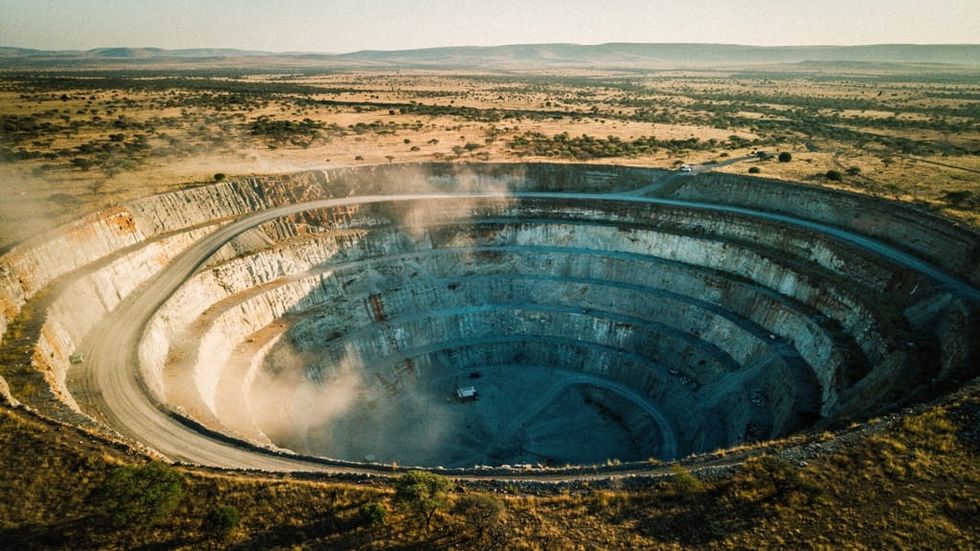
Platinum set an all time high of 2,923 dollars an ounce on the twenty sixth of January this year. It trades near 1,665 today. That is a fall of about forty three percent in under nine months, and it happened without a single significant
Platinum set an all time high of 2,923 dollars an ounce on the twenty sixth of January this year. It trades near 1,665 today. That is a fall of about forty three percent in under nine months, and it happened without a single significant thing going wrong on the supply side.
Mine supply this year is roughly flat at 5,551 thousand ounces. Recycling is up eight percent. The World Platinum Investment Council, which publishes the most widely followed balance, forecast a deficit of 297 thousand ounces for this year in May and a surplus of 265 thousand ounces in September. That is a swing of 562 thousand ounces in four months, and none of it came from the ground. In the same two reports the estimate of metal already sitting above ground was revised upward, from 1,747 thousand ounces to 2,010 thousand. Johnson Matthey, using its own numbers, still has the market in deficit.
What actually changed is the buyer. Total demand is down eighteen percent. Chinese platinum jewellery fabrication is forecast to fall from 578 thousand ounces to 327, a drop of forty three percent that happens to match the drop in the price. Investment turned from absorbing more than a million ounces last year into net selling this year.
The Historical Echo
Palladium set its all time high of 1,094 dollars an ounce on the twenty sixth of January 2001, the same calendar day as platinum's high this year. By the thirteenth of November 2001 the Engelhard quote was 319 dollars. That is seventy one percent off the top in under ten months.
The cause of the rise was real. Russia supplied roughly two thirds of the world's palladium, and its exports were unreliable. Norilsk Nickel restricted spot sales in August 2001, and a new presidential decree on precious metals trading stalled shipments until September. Anyone reading only the supply headlines had reason to buy.
Ford Motor Company read them and acted. Through late 2000 and early 2001 its purchasing department built fixed price contracts and physical inventory, by outside estimate something between 1.9 and 2.0 million ounces of palladium, some of it at prices approaching 1,100 dollars. The company's own engineers were meanwhile close to a technical change that would cut future palladium needs substantially, and the purchasing side did not know. Ford took a write off of about a billion dollars on the stockpile, booked in the fourth quarter of 2001, against metal then worth roughly 430 dollars an ounce.
The second order effect was the durable one. North American gross autocatalyst palladium demand fell from 2,805 thousand ounces in 2000 to 2,020 in 2001, a twenty eight percent decline, as carmakers deliberately shifted their catalyst mix back toward platinum to stop depending on a single Russian supplier. The high price did not call forth more metal. It called forth engineers.
Where Patient Capital Is Positioning
The same substitution machinery is running again, and once again it is being set at the wrong price. Johnson Matthey notes that the platinum rich catalyst systems specified for European Euro 7 vehicles were chosen when palladium cost more than platinum. That stopped being true in February 2024, and the platinum premium has since widened from 1.23 times palladium at the end of last year to about 1.48 times now. Those specifications take years to work through and they will arrive into a price relationship that has already reversed.
Palladium itself is the quieter story. Russian mine output is falling to its lowest level in at least two decades, Nornickel has guided its own production down about eleven percent, and Johnson Matthey still expects palladium's first annual surplus since 2011. The largest producer in the world is cutting output and publicly forecasting a glut.
For capital that thinks in decades the distinction worth holding onto is between a price that moved because the metal became scarcer and a price that moved because the holders changed. The first is information. The second is weather. A forty three percent fall with flat mine supply, rising recycling and collapsing jewellery demand is the second kind, and it says nothing about what an ounce of platinum will be worth in 2050. What the 2001 episode says is narrower and more useful: the worst outcome in a metal like this is not owning it through a drawdown. It is buying a year's industrial consumption at the top because the supply story was true.
The Capital Memo