Strategic Intelligence Feed
Real-time analysis of the resources and power shifts redefining global sovereignty
Four Years for a Transformer
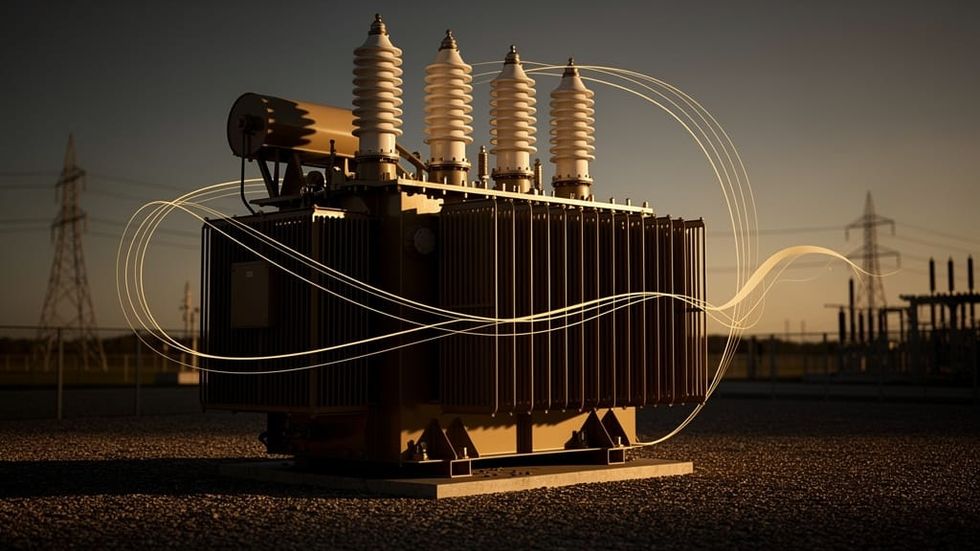
A large power transformer is the least glamorous object in the electricity system and the one nothing works without. It is a steel core wrapped in copper, sitting in oil inside a tank, and its job is to change voltage so that power generated in one
A large power transformer is the least glamorous object in the electricity system and the one nothing works without. It is a steel core wrapped in copper, sitting in oil inside a tank, and its job is to change voltage so that power generated in one place can be used in another. There is no substitute and no way around it.
Lead times for the large units now run to about four years. Industry quotes stood at 128 weeks for standard units and 144 weeks for generator step up units through last year. Before 2020 the Energy Department recorded lead times of under a year. One American manufacturer that historically quoted 38 weeks was quoting 38 months by 2022. Hawaiian Electric watched a pad mounted unit go from sixteen weeks to 142. Prices have risen between seventy and ninety five percent since 2019 depending on the class of equipment, and Wood Mackenzie put last year's shortfall at thirty percent for power transformers.
The Historical Echo
The United States has watched a foundational manufacturing capability leave before, and the machine tool industry is the case that should have taught the lesson.
Machine tools are the machines that make machines, which gives them the same position in manufacturing that transformers have in electricity. In the early 1980s the United States was the world's largest producer. Imports took ten percent of the domestic market in 1973, twenty two percent by the late 1970s, and roughly sixty percent by the late 1980s. By 1986, three quarters of the numerically controlled machines sold in America were imported, with Japan alone holding half that market.
The collapse was quick. Domestic sales fell from five billion dollars in 1981 to two billion in 1983. Employment fell by a third in those two years and to half its 1981 level by 1991. Half of all American machine tool firms closed between 1982 and 1987.
The part that matters is what came next, which is not much. RAND's assessment, working from data through the early 1990s, found the industry far from recapturing lost share even after a decade of partial recovery and after its Japanese and German rivals hit troubles of their own. The customers had gone, the suppliers had gone, and the people who knew the work had found other work. Capability is not a factory. It is a factory plus an order book plus a workforce plus a supply chain, and when the four come apart they do not reassemble because conditions improved.
Where Patient Capital Is Positioning
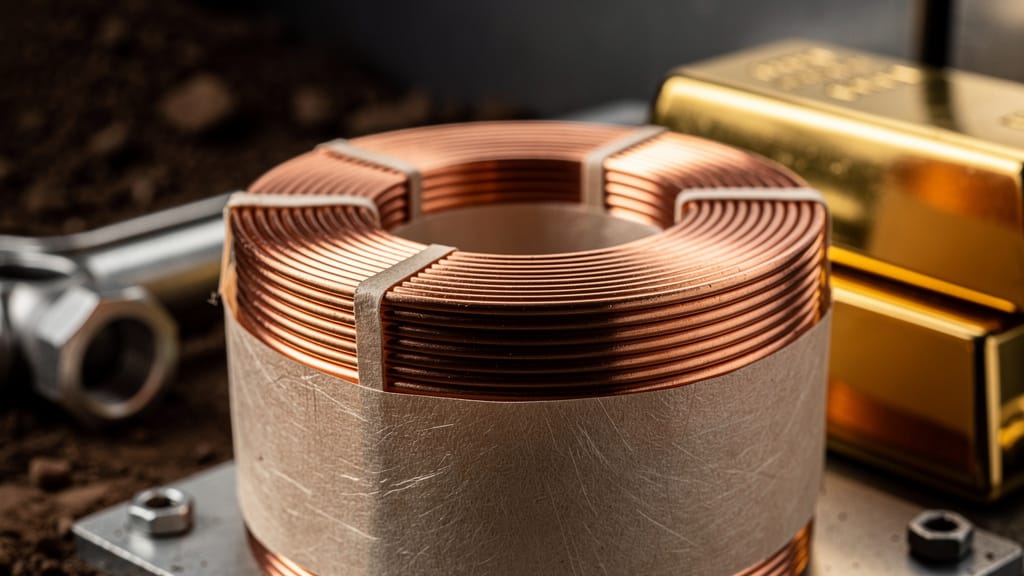
The transformer position has the same structure. The United States imports roughly eighty percent of its large power transformers, and total transformer imports rose from $16.1 billion in 2020 to $35.4 billion last year, led by Mexico, China, Thailand and Japan. Grain oriented electrical steel is about a quarter of the cost of a unit and the country is roughly eighty percent dependent on imports of it, with Cleveland-Cliffs the only domestic producer and the highest grades made solely in Japan. Copper is another quarter, and now carries a fifty percent tariff. Labour is about thirty six percent, and 89 percent of manufacturers told the Energy Department they struggle to find qualified workers. The winding machines themselves take one to two years to obtain.
Estimated domestic capacity was around 343 units a year, running at forty percent utilisation in 2019, against projected demand approaching 900 units by next year. Money is now arriving. Hitachi Energy committed $457 million to a plant in South Boston, Virginia, part of a broader billion dollar programme announced last September. Siemens Energy began production at a new Charlotte facility this year and announced a further $421 million expansion in February. These are welcome, and they will deliver tens of units a year against a shortfall measured in hundreds.
Demand is not waiting. American electricity consumption has risen seven percent since 2020 after falling one percent across the previous decade. Dominion's Virginia utility projects demand up 21 percent by 2030, with data centres already about a quarter of its sales.
For capital that thinks in decades, this is the copper and the rare earth story again in a different object, and the recurring shape is worth naming. The binding constraint on physical systems is almost never the raw material. It is the specialised capacity to turn the raw material into the thing, and that capacity is slow to build, quick to lose, and very hard to value until the moment somebody needs it and cannot have it for four years.
The Capital Memo