Strategic Intelligence Feed
Real-time analysis of the resources and power shifts redefining global sovereignty
Who Owns the Ground, and Who Is Counting
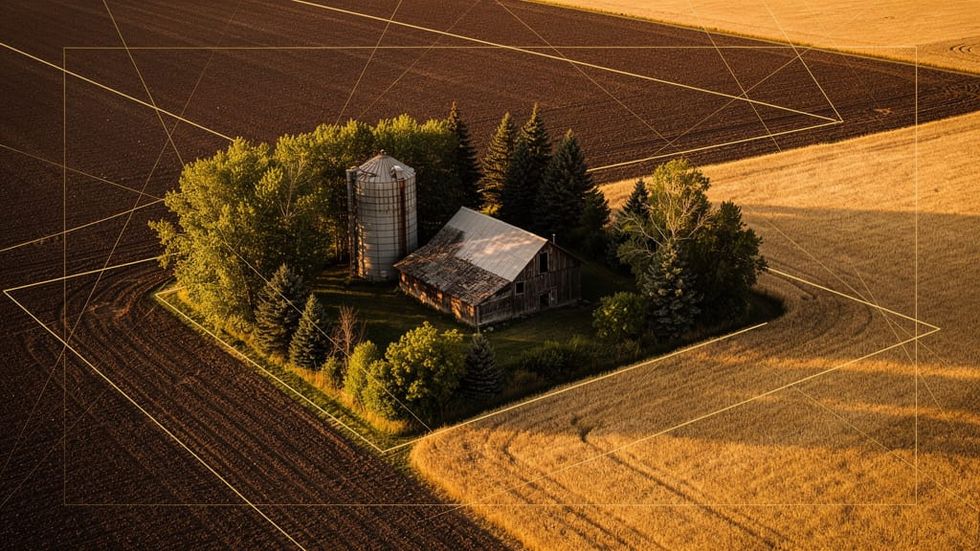
Foreign persons and entities held 46.3 million acres of American agricultural land at the end of 2024, according to the Agriculture Department's most recent annual report under the Agricultural Foreign Investment Disclosure Act. That is about 3.6 percent of all privately held
Foreign persons and entities held 46.3 million acres of American agricultural land at the end of 2024, according to the Agriculture Department's most recent annual report under the Agricultural Foreign Investment Disclosure Act. That is about 3.6 percent of all privately held agricultural land in the country. The largest holder by a wide margin is Canada, with 16.1 million acres or roughly a third of the foreign total, followed by the Netherlands, Germany, Italy and the United Kingdom, each in the range of three to ten percent. China holds 247,659 acres, which is less than one percent of the foreign total, and 92 percent of that sits with five companies.
Those proportions are worth stating plainly because the political conversation tends to run ahead of them. The more consequential development is not the level of foreign ownership but the fact that Washington has decided it does not adequately know what the level is. Foreign holdings grew by an average of 2.6 million acres a year between 2017 and 2023, and a 2024 Government Accountability Office review found the Department was slow to share what it collected with national security agencies and that the information itself was not current enough to be useful.
The Historical Echo
The reporting regime now being overhauled was itself born from precisely the same complaint, and the symmetry is close enough to be instructive. Congress passed the Agricultural Foreign Investment Disclosure Act in 1978. It did not do so in response to a documented and quantified foreign buying spree, because no such quantification existed. It did so because a Government Accountability Office study published in June of that year concluded that no accurate data existed on foreign ownership of agricultural land at all.
The concern that animated the House Agriculture Committee was not primarily strategic. It was that rising land prices, taxes and input costs were pushing family operations toward what the committee described as economic disaster, and members wanted to establish whether foreign capital was among the causes. The statute they wrote created an obligation to report rather than a restriction on buying, on the theory that a country cannot form a sensible policy about something it has not measured.
Nearly half a century later the same agency has been told by the same watchdog that its measurements are inadequate, and the response has been to rebuild the measuring apparatus rather than to prohibit the activity. That is a recognizable pattern in American policy toward productive land. The instinct is to insist on visibility first and to argue about restriction afterward.
Where Patient Capital Is Positioning
The rebuild is substantial. The Department issued an advance notice in December of last year and a full proposed rule in June, which would expand the definition of agricultural land to include solar and wind installations, pipelines, processing facilities and research acreage, eliminate the exemption for parcels under ten acres, cut the lease reporting exemption from ten years to one, and remove it entirely for entities connected to China, Russia, Iran and North Korea. The threshold at which an ownership interest must be reported would fall from 50 percent to 10, with comment sought on 5. Administration of the whole program moves to the Department's Office of Homeland Security. A new online filing portal opened in January. Roughly 29 states now have their own restrictions, with four enacting new laws in 2025 and seven amending existing ones in the 2026 session.
The direction of travel is not seriously in doubt, and it points one way. Productive American acreage is being reclassified, slowly and through administrative rather than dramatic means, from an ordinary asset that anyone may buy into a category the government intends to watch. The land itself is unchanged. What is changing is the set of people permitted to hold it without explanation, and that set is contracting.
For a family holding ground across generations, this is not a threat and may well be the opposite. Restrictions on who may buy an asset do not usually reduce its value to those who already hold it, particularly when the asset cannot be manufactured and the restrictions apply to a growing share of the world's available capital. The more durable observation is the one underneath. Governments do not build reporting systems for things they consider unimportant. The effort now going into counting American farmland acre by acre is itself a statement about how the people doing the counting understand its value, made in the language of administrative rulemaking rather than headlines.
The Capital Memo