Strategic Intelligence Feed
Real-time analysis of the resources and power shifts redefining global sovereignty
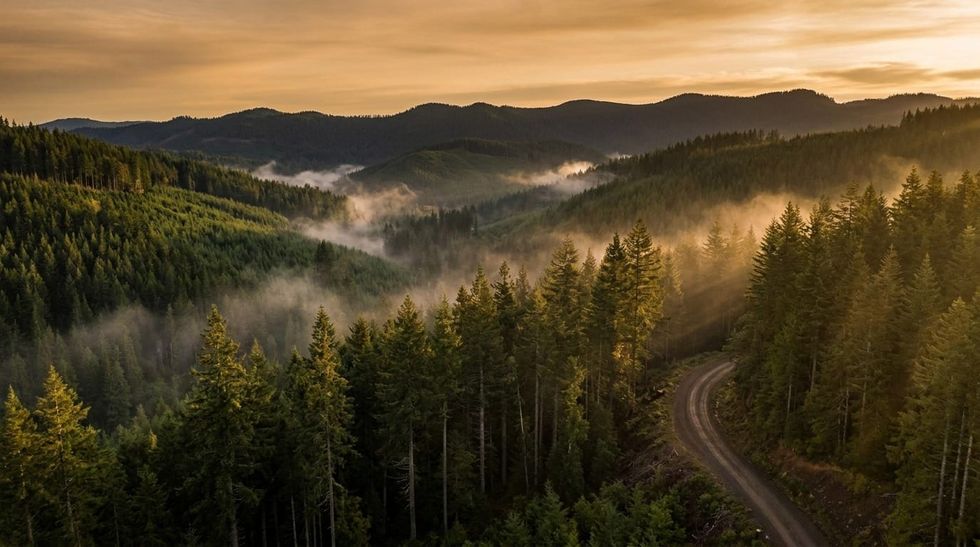
Timberland Is Being Repriced, and Not Just for the Trees
Institutional capital flowing into American timberland has nearly tripled over the past several years, and the reason is no longer just the price of lumber. Carbon credit income, generated simply by letting trees stand and sequester carbon, can now cover the entire annual cost of managing
Institutional capital flowing into American timberland has nearly tripled over the past several years, and the reason is no longer just the price of lumber. Carbon credit income, generated simply by letting trees stand and sequester carbon, can now cover the entire annual cost of managing a forest and, in some cases, account for a meaningful share of total returns. Land once valued purely for board feet is increasingly being valued for what else it can produce, from carbon credits to solar leases to eventual residential development. The headline is a story about a niche asset class. The underlying signal is a familiar one: productive land keeps finding new ways to generate income precisely because it is a finite, physical resource with more than one use.
The Historical Echo
American timberland has been the foundation of a great patient fortune before, built on exactly this instinct to acquire vast, productive acreage and hold it across generations. On January 3, 1900, Frederick Weyerhaeuser purchased 900,000 acres of Washington state timberland from railroad magnate James J. Hill for 5.4 million dollars, a price of roughly six dollars an acre, in what remains one of the largest single land transfers in American history. The land had come to the Northern Pacific Railway as a federal grant decades earlier for building the transcontinental railroad, and Hill was happy to convert that vast, undervalued holding into cash. Weyerhaeuser saw something different: a permanent, compounding asset that would keep producing value long after that first purchase price was forgotten.
The Weyerhaeuser Timber Company, formed just two weeks after the deal closed, became the foundation of a business that has now supplied lumber, paper, and building materials for more than a century, all built on the simple premise that owning the physical acreage mattered more than any single year's timber price. That original purchase looks almost absurdly cheap in hindsight, but the insight behind it was not really about price. It was about recognizing that productive land is a compounding, multi-generational asset whose uses expand over time in ways that are impossible to fully price at the moment of purchase.
Where Patient Capital Is Positioning
Today's timberland investors are working from the same instinct, even if the specific revenue streams look different. Carbon credits did not exist as an asset class in 1900, and neither did utility-scale solar leases, but both are now adding new layers of income to acreage that would otherwise have been valued on timber alone. This is the same pattern that has played out across gold, silver, and farmland this year: a physical, finite asset finding new sources of demand that were not part of the original investment thesis, simply because scarcity and utility tend to compound in ways paper assets do not.
For a family thinking across generations rather than a single harvest cycle, timberland offers something the twentieth century's timber barons understood well before the term ESG existed. Productive land is rarely valued correctly at the moment it is purchased, because its uses tend to expand over the decades that follow. Weyerhaeuser did not buy 900,000 acres because he had modeled carbon credit markets or solar leasing income. He bought it because he trusted that owning a vast, physical, productive asset outright would outperform almost any paper alternative available at the time, a bet that a century of subsequent history has more than validated.
That same logic applies to a family evaluating timberland today, whether directly or through a fund structure. The specific revenue stream in vogue this decade, carbon credits, will not be the last new use discovered for productive forestland, any more than lumber alone was the final word on Weyerhaeuser's original purchase. What matters more than predicting the next revenue category is the underlying asset itself, finite, physical acreage that keeps finding new ways to earn its keep across a time horizon measured in decades rather than fiscal quarters.
The Capital Memo