Strategic Intelligence Feed
Real-time analysis of the resources and power shifts redefining global sovereignty

The Fertilizer Mineral That Once Started a War
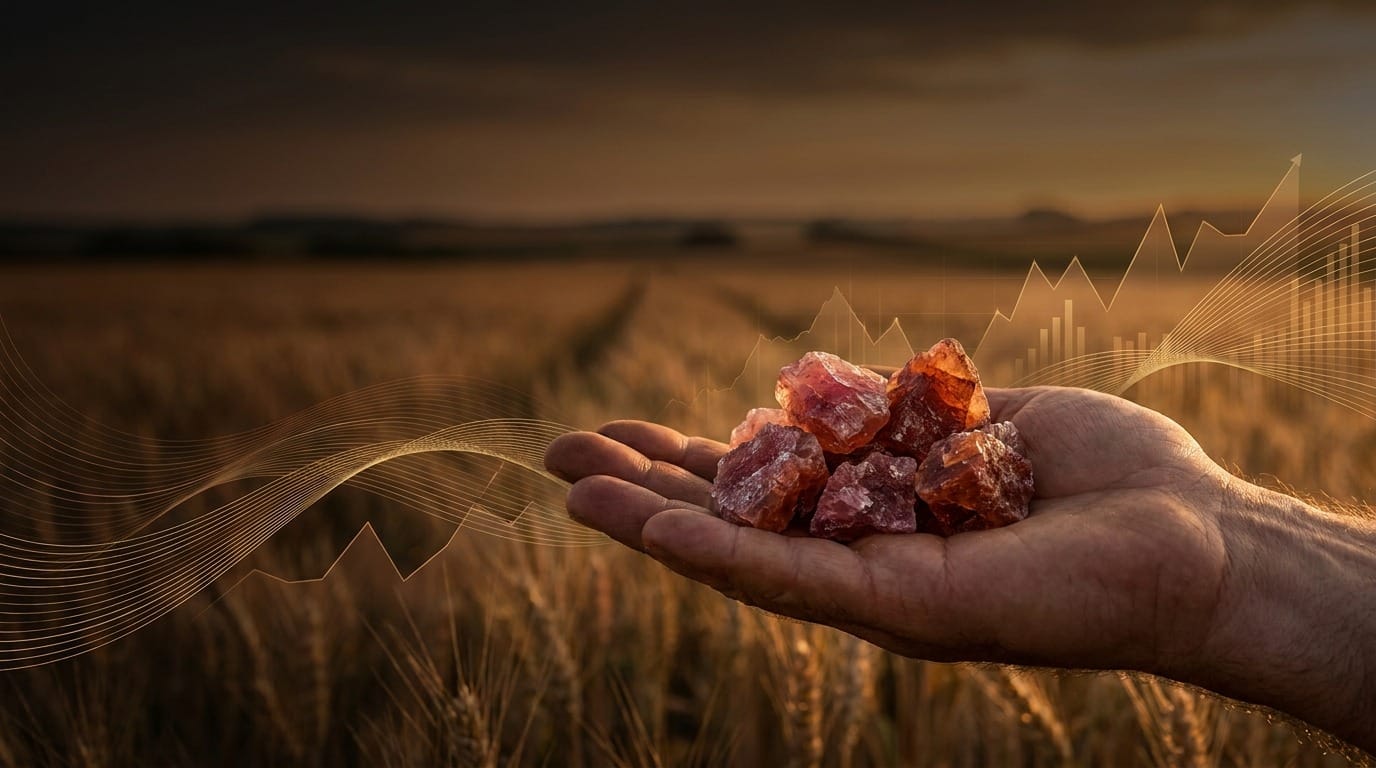
Global fertilizer markets have spent the past several years absorbing repeated shocks to potash supply, the mineral that underpins crop yields worldwide, with prices spiking to historic highs in 2022 as trade in the fertilizer from one of the world's largest producing nations was
Global fertilizer markets have spent the past several years absorbing repeated shocks to potash supply, the mineral that underpins crop yields worldwide, with prices spiking to historic highs in 2022 as trade in the fertilizer from one of the world's largest producing nations was disrupted. Prices have since eased as alternative supply routes opened, but the episode was a clear demonstration of how directly a single, unglamorous mineral input can move the cost of growing food across the entire planet. The headline framing treats fertilizer disruptions as a niche commodity story. History offers a considerably more dramatic reminder of what nations have been willing to do over control of the raw materials that make modern agriculture possible.
The Historical Echo
In 1879, Chile went to war with Bolivia and Peru over a stretch of the Atacama Desert containing something that sounds almost mundane today, vast deposits of nitrate and guano used as fertilizer and as a key ingredient in explosives. The conflict began after Bolivia imposed a disputed tax on a Chilean company mining the deposits, escalating into a full scale war that lasted five years, redrew the map of South America, and left Bolivia permanently landlocked, a geographic consequence still shaping the country's economy and politics today. Chile emerged from what became known as the Saltpeter War in control of the disputed territory and the revenues from decades of nitrate exports that followed, establishing itself as the dominant power along the Pacific coast of South America for a generation.
The war is a striking reminder that a fertilizer mineral, something as ordinary sounding as nitrate for crop yields, was once valuable enough to justify a five year war between three nations. The underlying reason was straightforward. Nineteenth century agriculture in Europe and the Americas depended heavily on nitrate imports to sustain crop yields at a time when synthetic nitrogen fertilizer had not yet been invented, and the Atacama Desert held one of the only large scale natural sources of it anywhere on Earth. Whoever controlled that desert controlled a resource the rest of the agricultural world genuinely could not do without.
Where Patient Capital Is Positioning
Today's fertilizer minerals, potash chief among them, are geographically concentrated in a similarly small number of countries, and disruptions to that supply move food costs globally in ways most consumers never trace back to their source. The 2022 potash price spike did not trigger a war, but it produced real consequences nonetheless, reduced fertilizer use, lower crop yields, and higher food prices in the countries least able to absorb them, echoes of the same underlying vulnerability that made the Atacama's nitrate worth fighting over a century and a half ago.
For long-horizon capital, agricultural mineral inputs deserve a place in the conversation alongside gold, silver, and energy as a category of physical scarcity with direct consequences for the world's food supply. The Saltpeter War is an extreme historical case, but the underlying economics have not changed as much as the calmer tone of a modern commodity market might suggest. A handful of countries still control the minerals modern farming depends on, and that concentration remains a source of real, structural risk, whatever form the next disruption to that supply happens to take.
There is also a quieter parallel worth noting between the Atacama's nitrate and productive farmland itself, a physical asset already drawing renewed interest from long-horizon investors this year. Land that can reliably access fertilizer and water is worth more, in every era, than land that cannot, and the mineral inputs sustaining that productivity are every bit as physical and finite as the crops they help produce. A family thinking about hard assets in agriculture would do well to consider the full chain, from the soil itself to the minerals that keep it productive, rather than treating farmland and fertilizer as unrelated categories.
The Capital Memo