Strategic Intelligence Feed
Real-time analysis of the resources and power shifts redefining global sovereignty
The Emergency Oil Reserve Is Running Lower Than It Has in Decades
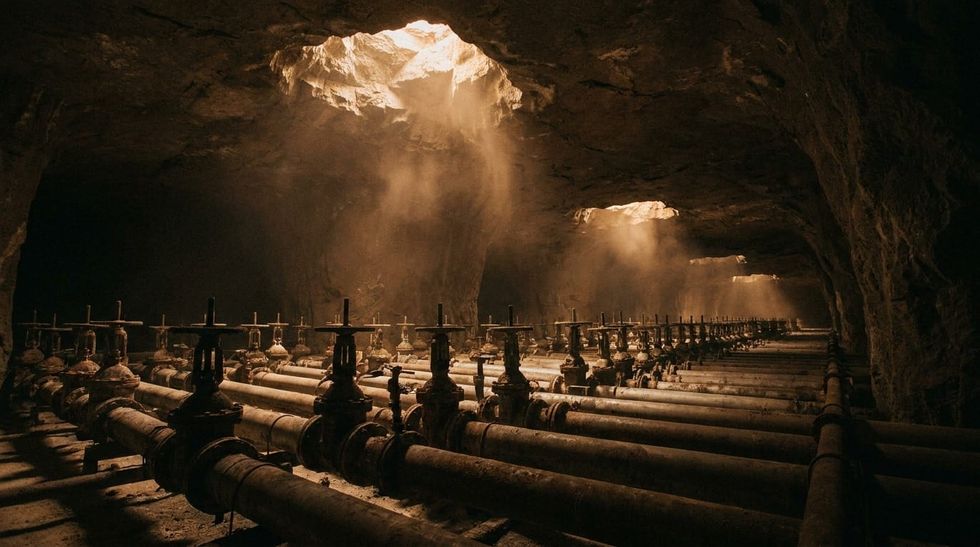
The Strategic Petroleum Reserve has fallen to its lowest level since 1982, drawn down sharply this year in response to a regional conflict that briefly threatened the Strait of Hormuz, one of the world's most important oil transit chokepoints. Some analysts now warn the
The Strategic Petroleum Reserve has fallen to its lowest level since 1982, drawn down sharply this year in response to a regional conflict that briefly threatened the Strait of Hormuz, one of the world's most important oil transit chokepoints. Some analysts now warn the reserve is approaching an operational floor, a level below which its underground caverns lose the ability to pump oil out quickly during an actual emergency. Refills are planned to begin later this year, but rebuilding a reserve of this scale takes considerably longer than depleting one. The headline framing is a story about oil inventory data. The more important question is what the reserve is actually for, and history offers a clear demonstration of the answer.
The Historical Echo
The Strategic Petroleum Reserve had existed for roughly fifteen years, built up steadily since its creation after the 1973 oil embargo, before it was used for its actual intended purpose. On January 16, 1991, as Operation Desert Storm began, President George H.W. Bush ordered the reserve's first ever emergency release, authorizing sales of up to 2.5 million barrels a day in coordination with allied nations, aimed squarely at calming a market bracing for a Middle Eastern oil shock. The effect was immediate and dramatic. Crude oil prices fell by roughly a third within a single day, a record decline, and prices remained more than 30 percent below their pre war level a full six months later.
That 1991 release stands as the clearest proof of concept the Strategic Petroleum Reserve has ever produced, a demonstration that a large, physically held stockpile of oil, sitting ready in underground caverns rather than existing only as a policy promise, could calm a genuinely panicked market faster and more credibly than words alone. The reserve did not need to be used often to justify its existence. It needed to be there, full and ready, the one time a real Gulf crisis actually tested it.
Where Patient Capital Is Positioning
Today's reserve finds itself in something closer to the opposite position from 1991, drawn down to multi decade lows at almost the exact moment a fresh Middle Eastern flashpoint around the Strait of Hormuz reminded everyone why the reserve exists in the first place. The 1991 episode worked precisely because the cavern behind the policy was full when the crisis arrived. A reserve running near its operational floor cannot replicate that kind of decisive, confidence restoring intervention nearly as convincingly, regardless of what officials announce, because the market can see the underlying physical stockpile is thin.
For long-horizon capital, the contrast between 1991 and today illustrates a principle that applies well beyond government oil reserves. A strategic buffer only provides real security when it is actually stocked, not merely authorized to exist. The same logic extends to a family's own version of a reserve, physical gold, silver, and other tangible assets held directly and ready rather than promised through a line of credit or a policy commitment that assumes calm conditions will persist. The Strategic Petroleum Reserve's finest hour came from being full precisely when it mattered. Its current position is a reminder of what the alternative looks like, and why physical readiness, not just the intention to be ready, is what actually holds up under real pressure.
Refill plans starting later this year will eventually restore some of what has been drawn down, but rebuilding takes years of sustained purchasing, not months, a timeline that mirrors what this publication has already observed in rare earth minerals, uranium enrichment, and domestic chip manufacturing this year. Physical capacity, once depleted, does not snap back on the same short timeline it took to draw it down. That asymmetry is precisely why a family's own reserve of physical assets is worth building and maintaining continuously, rather than treating it as something to assemble hastily once a crisis has already begun.
The Capital Memo