Strategic Intelligence Feed
Real-time analysis of the resources and power shifts redefining global sovereignty
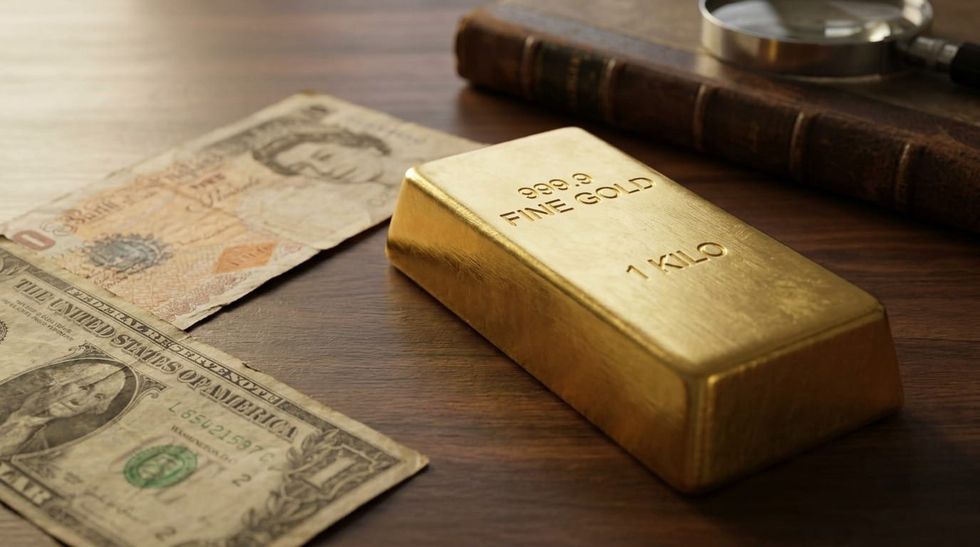
The Dollar's Slow Retreat and the Lesson From Sterling
The dollar's share of global foreign exchange reserves has slipped to its lowest level in roughly three decades, as central banks quietly redirect a portion of their holdings into a broader mix of other currencies and, increasingly, physical gold. Surveys of reserve managers show
The dollar's share of global foreign exchange reserves has slipped to its lowest level in roughly three decades, as central banks quietly redirect a portion of their holdings into a broader mix of other currencies and, increasingly, physical gold. Surveys of reserve managers show a large majority expect that decline to continue over the coming years. The headline framing treats this as a sudden crisis of confidence in the dollar. The more accurate and more useful framing is that reserve currency transitions are gradual, multi-decade processes that rarely announce themselves with a single dramatic event, and history offers a clear template for what that kind of slow retreat actually looks like.
The Historical Echo
The British pound sterling once occupied the position the dollar holds today, as the world's dominant reserve currency underpinning international trade and finance. Britain's underlying economic and industrial primacy had already begun eroding relative to the United States by the early twentieth century, well before the First World War. Yet sterling did not simply hand off its reserve role the moment that economic shift became apparent. It took two world wars, the accumulated strain of imperial overreach, and finally the 1944 Bretton Woods conference, which formally established the dollar as the currency other nations would hold and convert their own currencies against, before sterling's primacy was institutionally displaced.
Even then, the transition did not end cleanly. Economic historians studying the postwar period have described sterling as a kind of zombie international currency through the late 1940s, 1950s, and 1960s, still used and held internationally out of habit, trade relationships, and residual trust, long after Britain's economic capacity to support that role had genuinely diminished. The pound was devalued by roughly 30 percent in 1949 as reserves came under strain, one of several jolts along a path that stretched across decades rather than resolving in a single crisis. The lesson from sterling is not that reserve currencies collapse overnight. It is that their decline can lag the underlying economic reality by a generation or more, continuing to function on inertia and network effects long after the fundamentals have shifted.
Where Patient Capital Is Positioning
iewed through that historical lens, today's gradual reduction in dollar reserve share looks less like an emergency and more like the early stage of exactly the kind of multi-decade process sterling went through. The dollar's deep, liquid Treasury market and its central role in global payments remain genuine advantages that are not easily replicated, which is precisely why most reserve managers expect a slow drift rather than a sudden rupture. That said, the direction of travel matters more to a family thinking in decades than the pace of any single year's data.
What sterling's long twilight also illustrates is where central banks turned as their confidence in the reigning paper currency gradually diminished, toward diversification and, notably, toward physical gold, an asset with no dependence on any single government's continued economic primacy. Today's central banks are following a similar instinct, adding gold to reserves even as they trim dollar holdings, precisely because gold's value does not rest on which currency happens to be ascendant in a given decade. For long-horizon capital, the practical implication is not to abandon dollar-denominated assets on the strength of a single data point, but to recognize that currency dominance is not permanent, and that physical assets held outside any single currency system have historically been the position of choice for those managing wealth across the kind of multi-decade horizon these transitions actually take.
A family thinking three or four decades ahead is, in a sense, in a similar position to a reserve manager in the 1950s trying to read the tea leaves of sterling's decline. The signal was there well before the outcome was obvious, and those who recognized it early had time to adjust deliberately rather than react to a crisis. The dollar is not sterling, and the circumstances of each era differ in important ways, but the underlying pattern, a slow erosion of trust in a paper currency running well ahead of any formal change in status, is one worth watching patiently rather than dismissing or panicking over.

The Capital Memo