Strategic Intelligence Feed
Real-time analysis of the resources and power shifts redefining global sovereignty

Indonesia Has Controlled a Global Supply Chain Before
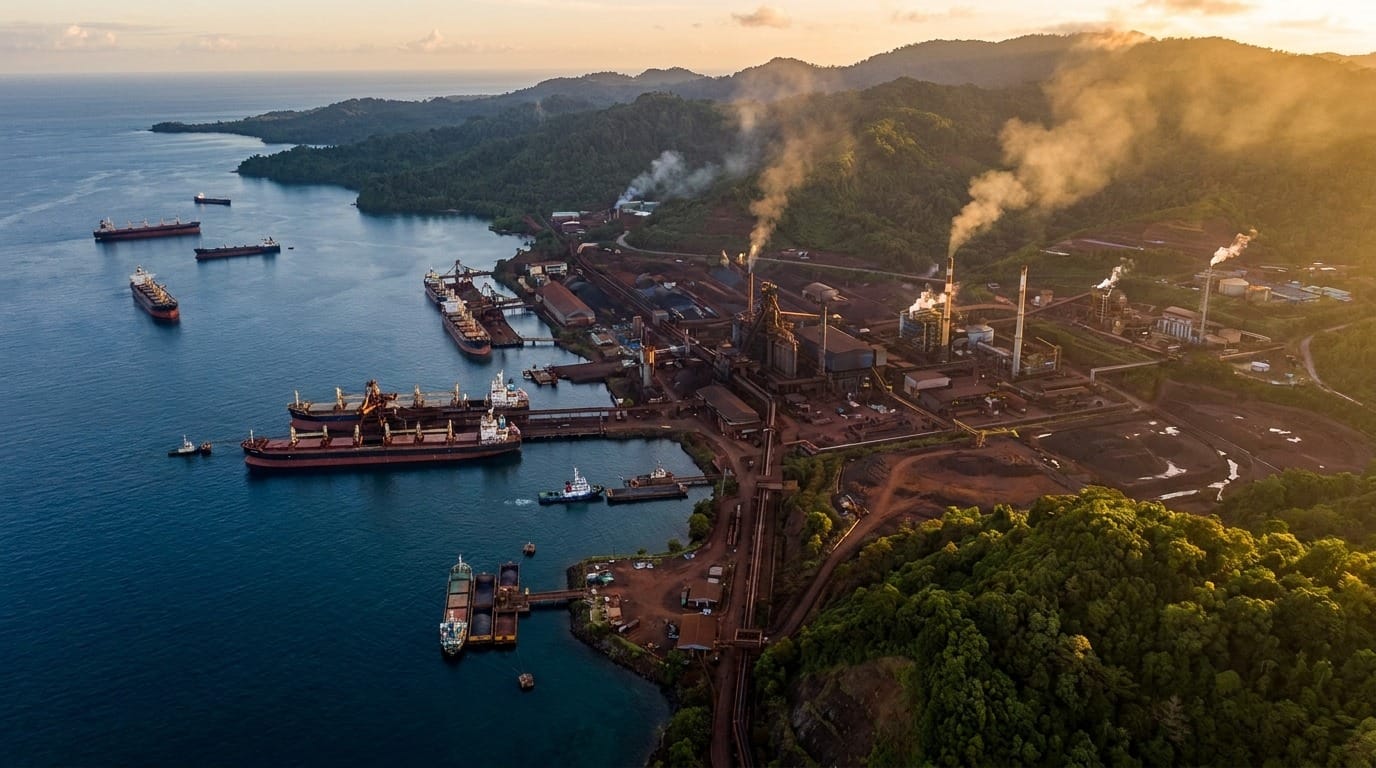
Indonesia, which controls roughly 42 percent of the world's known nickel reserves, has spent this year tightening its grip on the metal that underpins much of the global electric vehicle battery supply chain. Mining quotas have been capped, export restrictions on unprocessed ore have
Indonesia, which controls roughly 42 percent of the world's known nickel reserves, has spent this year tightening its grip on the metal that underpins much of the global electric vehicle battery supply chain. Mining quotas have been capped, export restrictions on unprocessed ore have hardened into a broader system of government control extending into processed nickel exports, and a recent agreement with the United States now commits Jakarta to loosen some of those restrictions specifically for American buyers. The headline framing treats this as a modern trade policy story about critical minerals. The more striking framing recognizes that this is not the first time the Indonesian archipelago has held the world's supply of an essential physical resource in its hands, and it is worth understanding how differently that leverage was used the last time around.
The Historical Echo
For centuries, the Banda Islands, part of the same Indonesian archipelago producing nickel today, were the only place on Earth where nutmeg and mace grew. That total natural monopoly made the spice one of the most valuable commodities in the world, and in the early seventeenth century the Dutch East India Company set out to control it completely. In 1621 the company's forces seized the islands, and over the following century the Dutch went so far as to destroy nutmeg trees on outlying islands they could not fully control, deliberately limiting global supply to keep prices, and their own profits, as high as possible. Until cultivation eventually spread elsewhere in the mid eighteenth century, the Dutch monopoly over Banda's nutmeg generated enormous, sustained profits built entirely on physical control of a resource that literally could not be grown anywhere else.
The nutmeg monopoly is a stark historical example of what total control over an irreplaceable physical resource can be worth, and how far a controlling power was once willing to go to preserve that control. It is also a reminder that such monopolies do not last forever. Nutmeg cultivation eventually spread beyond the Bandas, other producers emerged, and the extraordinary premium the Dutch had extracted for over a century gradually eroded as the resource stopped being scarce in the way it once was.
Where Patient Capital Is Positioning
Indonesia's approach to nickel today looks nothing like the Dutch East India Company's methods, but the underlying economics rhyme in an important way. A nation holding a dominant share of a resource the rest of the industrial world needs has genuine leverage, and Jakarta is using it through export quotas and processing requirements rather than force, extracting value by requiring foreign buyers to invest in Indonesian smelting and refining capacity rather than simply exporting raw ore. The strategy has worked well enough that Indonesia's processed nickel export value has grown many times over within a decade.
For long-horizon capital, the nutmeg parallel carries a useful caution alongside the obvious lesson about resource leverage. Every historical monopoly on a physical resource has eventually faced competition, substitution, or new supply, exactly as nutmeg cultivation eventually spread and battery chemistry is now shifting toward nickel free alternatives in a meaningful share of new electric vehicles. Physical scarcity creates real, durable leverage while it lasts, but it is rarely permanent, and the nations and investors who benefit most tend to be the ones who understand that a resource monopoly is a window of advantage to use well, not a permanent entitlement to count on indefinitely.
That same lesson applies in reverse to anyone allocating capital around a single critical mineral supply chain. Nickel's current importance to battery technology is real, but so was nutmeg's importance to European cuisine and medicine three centuries ago, and neither scarcity proved permanent once the underlying conditions shifted. Broad, diversified exposure to physical resources, rather than concentrated exposure to whichever single mineral happens to dominate this decade's headlines, has historically proven the more durable position across the kind of multi-generational horizon this publication is built around.
The Capital Memo